Verify Carbon-Plated Running Shoes on Kakobuy
Verify Carbon-Plated Running Shoes on Kakobuy
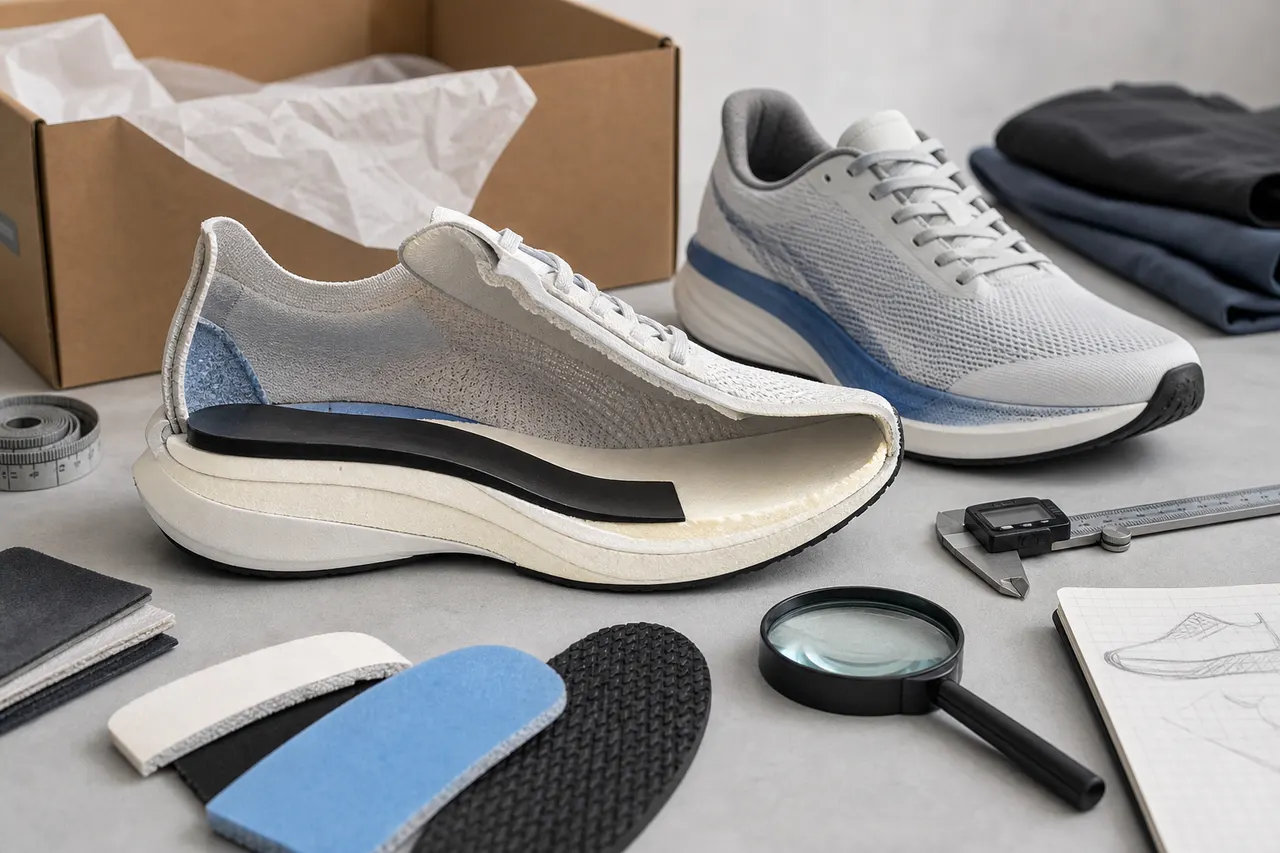
Carbon-plated running shoe product pages often group "carbon plate," "propulsion," "energy return," and "racing" together, but these terms vary in how verifiable they are. For buyers using Kakobuy to purchase from Chinese e-commerce, the task isn't to judge whether a shoe is "fast" based on marketing alone, but to confirm what structural evidence the seller actually provides, which performance claims remain unverified, and what to check after the shoes arrive at the warehouse.
This article is for buyers comparing specific product pages, preparing to order, or waiting for warehouse inspection. After reading, you can categorize your decision into three groups: order when evidence is sufficient, ask follow-up questions when key information is missing, or drop the item when core claims cannot be verified. This article is not for authenticating brand genuineness, nor does it replace laboratory testing of materials, stiffness, energy return, or durability.
Information verification date: August 30, 2026. Product prices, stock, sizes, seller promises, shipping fees, return/exchange conditions, and route restrictions may change. Reconfirm before payment and before submitting international parcels.
First, clarify the carbon-plated shoe claims to verify 🔎
Copy the product page's original claims. Don't summarize all descriptions as "carbon-plated shoe" at the start. At minimum, record the following:
Plate name: carbon fiber plate, composite plate, nylon plate, or only "propulsion plate"
Plate shape: full-length, half-length, forked, or unspecified
Structural position: on top of the midsole, inside, underneath, or no cross-section explanation
Verifiable specs: single shoe weight, heel and forefoot stack heights, heel-to-toe drop, last width, and size range
Functional claims: improved propulsion, enhanced energy return, smoother transition, or suitable for racing
Applicability claims: for what distance, surface, pace, and training type
The presence of "carbon plate" in the product title only proves the seller made a textual claim. It alone cannot prove material, coverage, or actual performance. If the title, details text, structural diagrams, and real photos conflict, record it as "unresolved contradiction" rather than picking the most favorable one.
Separate product page claims into specs, function, and subjective description
Different claims require different evidence. Mixing them together is the easiest way to let clear size numbers endorse vague performance marketing.
Claim category | Common wording | Reasonable verification | Cannot be proven by alone |
|---|---|---|---|
Specs | Weight, thickness, drop, size, plate coverage | Spec table, measurement images, same-size weighing, structural cross-section | Ad slogans or a single exterior photo |
Structure | Full-length carbon plate, forked plate, plate inside midsole | Clear cross-section, teardown data, model-consistent structural description | Outsole tread pattern, shoe labels, or bending photos |
Function | Propulsion, energy return, smooth transition | Clear test method, control conditions, and applicable boundaries | Words like "race-grade" or "tech feel" |
Subjective description | Bouncy foot feel, light, stable | Only as a specific user's feeling under specific conditions | Product page images or unexplained review summaries |
If the seller only offers "strong propulsion" without structural images, specs, or test conditions, downgrade it to an unverified marketing description. Conversely, even if a plate-like structure is confirmed inside the shoe, it doesn't automatically mean it suits your pace, distance, or gait.
Look for carbon plate position, coverage, and structural description 🧩
Prioritize evidence corresponding to the specific model, specific version, and specific shoe size. Different batches or sizes may use different structures, so you cannot substitute teardown images of a similar-looking model for the current product.
A suggested inspection order:
Check that the model name in the title, spec options, and detail images match.
See if there's a midsole cross-section, and confirm the image clearly labels the plate name, position, and coverage.
Check if the plate is full-length continuous, partial forefoot, or forked.
Check if the structural diagram is for the current shoe model, not a generic technology promo image.
Ask the seller to specify plate composition. If they only say "carbon plate tech" without material details, keep it marked as unconfirmed.
Save the product page claims and verification date for later comparison when the shoes arrive.
Don't conclude a shoe has carbon fiber just because of a groove down the center of the outsole or exposed black components. Color, texture, and shape at most support "there might be a structural component here," but cannot prove material formula or rule out decorative pieces or other composite materials.
Check midsole thickness, bending point, and outsole profile from images 📷
Images are good for checking visible structure, but need scale references and multiple angles. Check the medial side, lateral side, heel, forefoot rocker, and complete outsole. Confirm all images belong to the same colorway and version.
Don't judge midsole thickness from exaggerated perspective side profile photos. If the page provides a scale image, confirm measurement location, shoe size, and whether it includes insole and outsole. Without a scale, you can only describe visual outline, e.g., "heel looks higher than forefoot," not write specific millimeters.
Be cautious about so-called bending points. A seller's photo of manually bending the shoe only shows the shape change at that moment. Without knowing applied force, location, and shoe size, you cannot calculate longitudinal stiffness. If the shoe bends at the forefoot, it doesn't prove there's no full-length plate inside, because the upper, midsole foam, outsole segmentation, and photography method all affect visible shape.
Outsole profile can help spot stability clues, e.g., whether the heel is significantly narrowed, whether the forefoot contact area is wide, whether outsole rubber covers main wear zones. But images cannot prove wet-surface grip, wear durability, or real stability in turns.
Record energy return and propulsion feel that cannot be proven by appearance
Energy return and propulsion feel cannot be verified through product images. Even if the plate material is real, actual feel is affected by foam properties, plate shape and stiffness, upper lockdown, shoe size, runner weight, foot strike, speed, and fatigue state.
Keep the following claims as "unverified" unless the seller provides clear methods, sample, and control conditions:
Improves running performance by a certain percentage
Reduces energy loss by a specific percentage
Suitable for all runners or all paces
Simultaneously guarantees strong propulsion, soft cushioning, and high stability
Promises race results based solely on material name
The key is not to prove the claim is wrong, but to avoid using currently unconfirmable conclusions as purchase basis. A safer approach is to separately record "structural evidence seen" and "performance still needing real use or professional testing."
Interpret known information with pace, distance, and stability needs 🏃
Complete evidence does not mean suitable for everyone. Decision should return to your primary task: daily easy running, tempo training, long-distance training, or racing. If you cannot clearly define your main use, don't pay extra price, adaptation cost, or stability risk just for the "carbon plate" label.
Interpret known information as follows:
Primarily easy daily runs: prioritize comfort, size, durability, and stability needs. Don't treat plate name as a core advantage.
Primarily tempo training or racing: focus on weight, drop, plate coverage, forefoot geometry, and upper lockdown, but still cannot predict performance from specs alone.
Longer distances: besides propulsion claims, pay attention to size margin, space after foot swelling, heel hold, and outsole coverage.
Stability-sensitive: check heel and forefoot contact width, midsole sidewalls, and upper support. If the structure is too narrow or too soft, even strong propulsion claims may not meet your needs.
First time trying high-stack or stiff-plated shoes: allow adaptation space. Don't make it your only option when returns are impossible or close to an important race.
If the product page doesn't state applicable conditions, you can at most make structural judgments, not write pace recommendations. Personal pain, injury, or medical issues should not be addressed by product marketing; consult qualified medical or sports professionals.
Use warehouse QC photos to check left/right shoes and structural details after arrival 📦
Kakobuy provides purchasing, storage, visual quality inspection, and international shipping services. Its standard inspection is suitable for checking style, quantity, color, size, model, and visible appearance, but cannot prove materials hidden inside the midsole or replace running tests.
Before ordering, confirm whether the current product allows returns/exchanges and the seller's specific deadlines and exceptions. According to platform information provided for this context, Kakobuy's return/exchange application window is typically described as within 120 hours after the item is stored in the warehouse. Special items and items where removal of packaging, tags, or accessories was requested may not be eligible. This condition is time-sensitive and must be rechecked on the order page before proceeding.
After receiving arrival notification, within the return window, prioritize checking:
Left and right shoes' model, color, and size labels match
Shoe box, hang tag, and tongue label match order options
Left and right side profiles, midsole height appearance, and outsole structure not obviously asymmetric
Upper has no separation, excess glue, damage, obvious stains, or stitching anomalies
Outsole rubber coverage and tread pattern match current version on product page
Visible structural components' position, shape, and left-right consistency
If single shoe weight claim affects decision, request separate weighing under same conditions if possible
When requesting photos, specify angles and purpose, e.g., "Please take horizontal side views of both left and right shoes' medial sides, with soles on the same plane." Vague requests like "take more photos" often don't resolve specific doubts.
Do not ask the warehouse to forcefully bend, cut open the midsole, or perform tests that may damage the product. Destructive inspection may affect return eligibility and is outside standard visual inspection scope. International shipping fees, customs charges, and available routes vary by weight, volume, destination country, and item attributes. Use actual quote before submitting the parcel.
Final action: order, ask, or abandon based on evidence completeness ✅
After verification, don't give the product a vague overall score. Act directly on evidence gaps:
Can order: specific model consistent, size and key specs clear, plate name, position, and coverage have mutually consistent evidence, and known conditions match your primary use. Performance feel still marked as to be verified in actual use.
Ask first: plate existence is stated, but material, coverage, version correspondence, or size parameters are missing. Send questions item by item to seller and save replies.
Recommend abandon: title conflicts with details, structural diagram cannot correspond to current model, seller avoids core questions, or return restrictions make key risks unmanageable after arrival.
Using this verification method may save mistaken purchase costs, return processing time, and unnecessary international shipping, but not a fixed guaranteed amount. Added cost is time to organize evidence before ordering and possibly longer wait for supplementary QC photos.
It suits buyers willing to make conditional judgments based on visible evidence and able to recheck promptly after arrival. Not suitable for those who want guaranteed performance from the "carbon plate" label alone, need brand authentication, or expect the warehouse to prove energy return and propulsion. If the key reason for buying happens to be unverifiable by product information or non-destructive QC, abandoning is usually safer than treating marketing as conclusion.
Browse our latest products and find your next favorite item.