Kakobuy Running Shorts Shipping Cost Guide
Kakobuy Running Shorts Shipping Cost Guide
Kakobuy Running Shorts Shipping Cost Guide
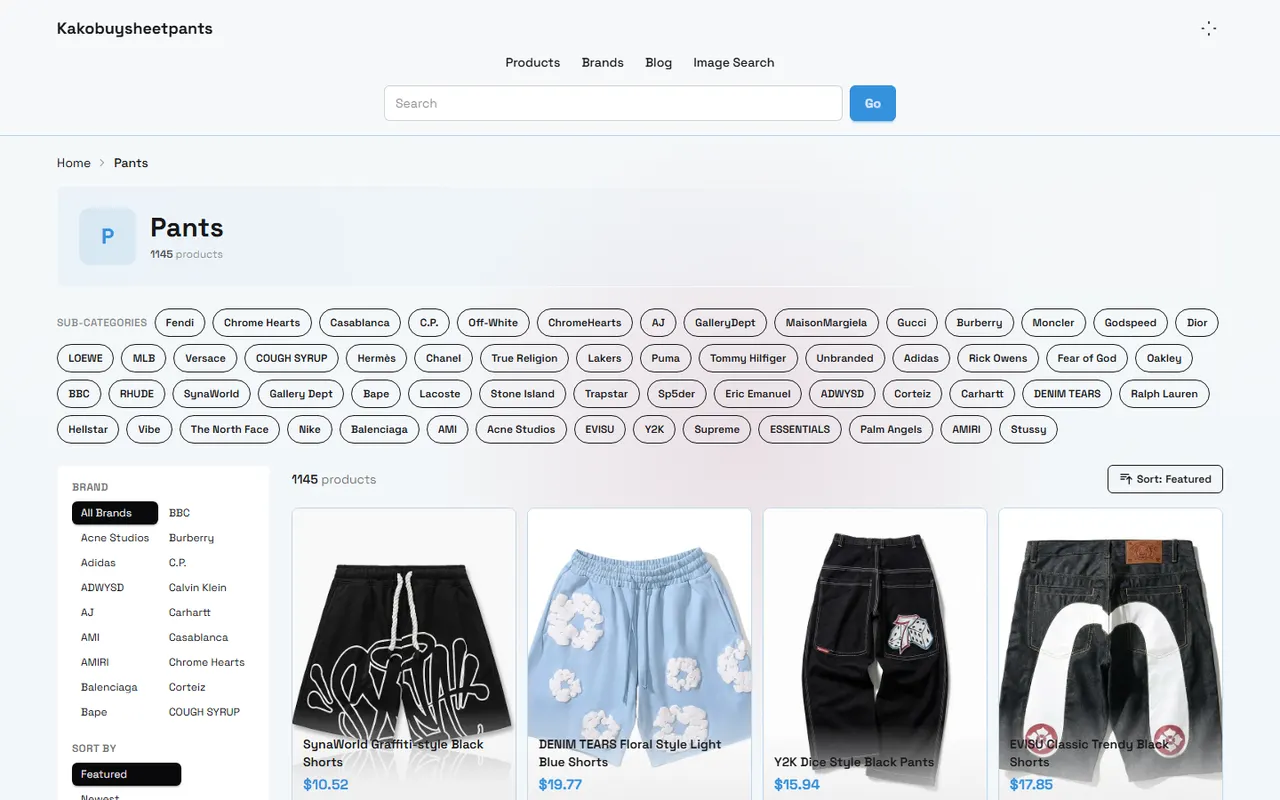
Image: Kakobuy product category page for reference, used only to illustrate the shipping cost recording method.
First, clarify the decisions to make regarding running shorts shipping costs
When purchasing lightweight clothing, the real problem isn't "which route is cheapest," but how to choose among acceptable total cost, delivery time, package risk, and customs clearance conditions. This article is for users who are ready to ship items overseas and need to compare packaging and route quotes.
After reading, you should be able to do three things: record product and packaging information, distinguish product fees, international shipping fees, and customs declaration fees, and obtain comparable quotes from different routes. This article does not apply to scenarios requiring evasion of customs inspection, under-declaring value, or splitting orders to avoid taxes. Declarations should be truthful and comply with the destination country's import regulations.📦
What product and packaging information to record on Kakobuy pages
Before submitting a shipping inquiry or viewing logistics options, first save verifiable information. Don't just record the product name from the product page, because final shipping fees are often affected by warehouse weighing, packaging method, and route restrictions.
It is recommended to record the following:
Product quantity, and whether they belong to the same batch
Actual weight after warehousing
Product length, width, height, or packaging dimensions available from the warehouse
Whether to keep original packaging, tags, and accessories
Whether to remove excess packaging
Whether to consolidate packages
Destination country or region and postal code
Acceptable delivery time range
Whether services under specific route restrictions are needed
Quotation currency, validity period, and applicable conditions
Kakobuy materials divide total agent fees into product fees, international shipping fees, and customs declaration fees. Product fees include product price and domestic shipping within mainland China. International shipping fees are calculated based on weight, shipping method, and destination region. Customs declaration fees usually depend on the shipping method. Actual settlement should still be based on current quotes displayed in your account.💳
How to understand product weight, volume, and chargeable weight separately
Actual weight is the weight obtained by weighing. Volume is determined by the packaged length, width, and height. Some logistics routes charge based on the higher of actual weight and volumetric weight, so "light clothing" does not necessarily mean "low package shipping cost." Whether volumetric weight is used, the calculation rules for volumetric weight, and the minimum chargeable weight must be confirmed with the specific route.
You can organize data as follows:
Item | Information to record | Role in estimation |
|---|---|---|
Actual weight | Weighing result of product and final packaging | Determine basic weight range |
Packaging dimensions | Length, width, height, and units | Determine if volumetric billing may apply |
Chargeable weight | Billing rules and result used by the route | Basis for international shipping quote |
Quotation conditions | Destination, delivery time, restrictions, validity | Determine if different routes are truly comparable |
Do not treat the appearance size in product page images as packaging dimensions. Folded thickness, whether original packaging is kept, and whether the warehouse uses cartons or bags can all change final data.
How folding method and packaging choices may affect estimation
Lightweight clothing is usually easy to compress, but compression does not mean unlimited volume reduction. Over-compression may increase wrinkles, damage, or after-sales disputes, and may not meet packaging requirements of certain routes. Users should first confirm available packaging options from the warehouse before deciding whether to remove unnecessary outer packaging.
Consolidation may reduce repeated first weight or some handling costs, but may also increase package total volume, chargeable weight, single loss risk, and single declaration value. Splitting may incur more fixed fees but may be suitable when there are route restrictions, weight limits, or different recipient arrangements.
Therefore, you cannot directly apply the conclusions "consolidation always saves money" or "splitting is always safe." At least compare two options:
Ship separately: record chargeable weight, fixed fees, and estimated delivery time for each item or batch
Consolidate: record dimensions after consolidation, chargeable weight, handling fees, and single risk
If the increased cost after consolidation exceeds the savings, or if the package value and risk exceed your tolerance, do not choose consolidation just because the number of packages is reduced.🧾
What cost conditions to compare among different shipping routes
When comparing routes, first fix the same conditions: same destination, same declaration principle, same batch of goods, same packaging assumptions, and similar service scope. Otherwise, a low price may simply be because the quote does not include certain fees or uses a different chargeable weight.
For each route, at least check the following questions:
Is the quote calculated by actual weight or volumetric weight?
Is there a minimum chargeable weight or first weight rule?
Does the quote include fuel, remote area, or handling fees?
How are customs declaration fees calculated, and are they included in the quote?
Is estimated delivery time calculated from warehouse departure, pick-up, or departure?
Is trackable logistics information provided?
Are there taxes, import restrictions, or additional document requirements in the destination country?
What are the prohibited, restricted, and packaging restrictions?
What is the coverage for loss, damage, or return?
What is the quote validity date?
Kakobuy materials mention that the platform offers multiple logistics routes and cooperates with several international carriers, but availability, restrictions, and actual costs of different routes vary with destination, product type, and warehouse data. Without current quotes and applicable conditions, do not describe any route as universally optimal.🚚
Which costs cannot be confirmed only from product images
Product images can only help determine general category, but cannot prove final weight, packaging dimensions, material restrictions, inventory status, or route availability. For lightweight clothing, the following information especially needs to wait for product warehousing or warehouse confirmation:
Final weighing result
Dimensions after packaging
Whether original packaging can be removed
Whether consolidation is allowed
Whether any route restrictions are triggered
Whether destination country incurs taxes or customs requirements
Handling fees for returns, route changes, or abnormal packages
Platform materials show that inspection services mainly check external information such as style, quantity, color, size, and model, and conduct prohibited item screening. Inspection results cannot substitute for shipping quotes, nor prove that the package meets all import requirements of the destination country.
If page, warehouse records, or route quotes do not clearly state, mark the item as "to be verified" and do not use estimated values as final costs.
Use a checklist to record quotes, conditions, and items to verify
You can establish a simple record before ordering:
Product fees: Are product price and domestic shipping within mainland China displayed separately?
Warehouse data: Actual weight, packaging dimensions, and weighing time
Packaging plan: Which packaging to keep, remove, or replace
Consolidation plan: Weight, dimensions, and handling fees after consolidation
Route quote: International shipping fees, customs declaration fees, and other explicit fees
Destination conditions: Country, region, postal code, and remote area determination
Delivery time conditions: Estimated range, start time, and possible delay factors
Compliance items: Truthful declaration, import restrictions, and required documents
Items to verify: Any fees not clearly stated in the current quote
Quote records should note the verification date, because shipping fees, routes, exchange rates, taxes, and platform policies may change. Do not use old screenshots without dates as the basis for current settlement.
Next steps: Determine an acceptable shipping plan
First obtain actual weight and packaging dimensions from warehouse records, then check chargeable weight and complete fees with available routes. Then create at least one separate shipping plan and one consolidated plan, comparing total amount, delivery time, tracking ability, customs conditions, and single loss risk.
Savings should be calculated based on complete quotes for both plans, not just international shipping fees. Consolidation may save repeated first weight or some handling costs, but increases single package value, volume, and concentrated loss risk; splitting may increase fixed fees, but may be more suitable when there are weight, route, or recipient restrictions.
Consolidation is suitable for those who can accept concentrated shipping risk of one package and whose chargeable weight after consolidation truly brings savings. Situations where consolidation is not recommended include: triggering a higher chargeable weight tier after consolidation, single package restrictions at destination, route conditions not allowing, or loss from one package exceeding tolerable risk. Those who choose splitting should confirm that additional fixed fees do not offset the actual value of spreading risk.✅
Before final selection, please rely on current warehouse data, route quotes, and destination requirements displayed in your Kakobuy account, and keep quote dates and verification records.
Agent platform shopping FAQ
1. Why doesn't kakobuy recommend using Google Sheets?
Google Sheets is only suitable for managing tables with a small number of products. When product entries increase, loading becomes very laggy, system response is noticeably slow, especially on mobile, and finding products is inconvenient. Kakobuy's website tables are superior in loading speed and visual experience.
2. How to judge product quality on kakobuy?
When evaluating product quality, carefully review QC photos and do not rely solely on factory-provided images, as those are often retouched. Through QC photos, you can confirm whether product details meet your specific requirements before deciding to actually purchase. Also, avoid buying extremely low-priced products, as they usually have poor quality.
3. What are kakobuy's QC photos?
Kakobuy has a dedicated quality control team. When your product arrives at the kakobuy warehouse, the platform conducts quality inspection and takes QC photos. Typically three photos are taken, and the team checks whether the product's color, size, specifications, and quantity match the order, and whether there are quality issues. However, electronic products are excluded; only appearance is checked. If quality issues or size/color discrepancies are found, the team immediately requests a return from the seller to ensure you receive high-quality products.
4. What product categories are available on the kakobuy website?
Kakobuy offers a wide range of product categories, including shoes, T-shirts, sweaters, hoodies, jeans, sweatpants, shorts, boardshorts, factory clearance items, down jackets, baseball jerseys, shirts, hats, jewelry, bags, electronics, sunglasses, socks, underwear, and trendy collectibles.
Browse our latest products and find your next favorite item.