How to Choose Training Tops: Breathability & Mobility
How to Choose Training Tops: Breathability & Mobility
How to Choose Training Tops: Breathability & Mobility
Choosing a training top depends first on where you train, how intense your activity is, and your layering needs—not just on color or marketing claims. Indoor workouts focus on sweat-wicking, room to move when lifting your arms, and long-wear comfort; outdoor warm-ups also need to account for wind, outer layers, and hem stability. 🏋️
This article solves a specific problem: how to filter training tops based on your training routine to find ones with breathability and mobility that better match your needs. After reading, you'll be able to do three things: define your use case, check visible information on product pages, and set up comparison criteria between candidates.
This article does not apply to purchase scenarios requiring professional protection grades, extreme-weather warmth, or compliance with specific team uniform regulations. Page information can only help you judge basic fit and functional clues, and cannot replace actual try-on.
First, Clarify Your Needs by Training Location and Intensity
Indoor strength training often requires repeated arm raises, presses, stretches, and torso twists. In this case, the top should not pull excessively at the shoulders and back, and the hem should not be so tight that it restricts bending. If the training environment is warm, the fabric's breathability structure and sweat diffusion speed matter more than thickness.
For low-intensity warm-ups, machine workouts, or short sessions, a slightly loose fit is acceptable. For high-intensity circuit training, treadmill work, or continuous dynamic movements, focus on whether the shoulder and sleeve restrict arm swing, and whether the hem frequently rolls up.
Outdoor warm-ups have more variables. Wind, temperature, and whether you need to add an outer layer all change the appropriate looseness. When wearing it alone, you can focus on airflow; when layering, you need to leave room in the shoulders, back, and armholes to avoid the inner and outer layers pulling against each other. 🌬️
Compare the Wearing Tasks of Indoor Workouts and Outdoor Warm-Ups
Use Case | Priority Checks | Possible Trade-offs |
|---|---|---|
Indoor workouts | Shoulder and back mobility, breathability structure, clues about post-sweat dryness | Too loose fit may hinder form observation and machine handling |
Outdoor warm-ups | Layering room, cuff stability, hem length | Looser fit may increase wind resistance or cause flapping |
Indoor-outdoor transitions | Fabric thickness, length, outer layer compatibility | When covering multiple scenarios, single-aspect performance may be less than a specialized piece |
Don't equate "breathable" with "thinner is always better." A fabric that is too thin may lack support, and cuffs that are too wide may interfere with movement. A safer approach is to evaluate breathability structure, fit, and training movements together. ✅
Judge Mobility from Fit, Shoulder/Sleeve, and Hem
Start by observing the fit at three points: shoulder line, underarm, and hem.
If the shoulder line sits too far inward, it may pull when raising your arms; if it drops too far, the cuffs may flap. The underarm area needs to allow forward and backward arm swing, but not be so wide that it interferes with machines or creates obvious bunching.
Sleeve length should be judged with movements. For short sleeves, check if they ride up when raising your arms; for long sleeves, check if the cuffs easily cover your palms or restrict wrist movement. For outdoor warm-ups, cuff stability is often more important than simply seeking looseness.
If the hem is too short, it may expose your lower back when bending or stretching; if too long, it may bunch up when sitting, using machines, or layering. Use "arm raise, bend over, torso twist, reach forward" as four basic movements to judge one by one whether the fit shown on the page is likely to meet your needs.
Check Fabric Details, Breathability Structure, and Care Information
Visible information on product pages usually includes fabric description, sleeve type, collar type, fit, size chart, and care instructions. When checking, distinguish between clear facts and speculation:
"Mesh" or "ventilation panels" are structural descriptions, but they don't mean the entire garment has the same breathability performance.
"Quick-dry" or "moisture-wicking" are functional claims that still need to be evaluated along with fabric composition and usage conditions.
If the fabric composition ratio is not provided, do not infer feel, elasticity, or durability on your own.
If actual measurements are not provided, do not treat page diagrams as precise measurement results.
If care information is missing, consider shrinkage, deformation, and washing restrictions as items to be confirmed.
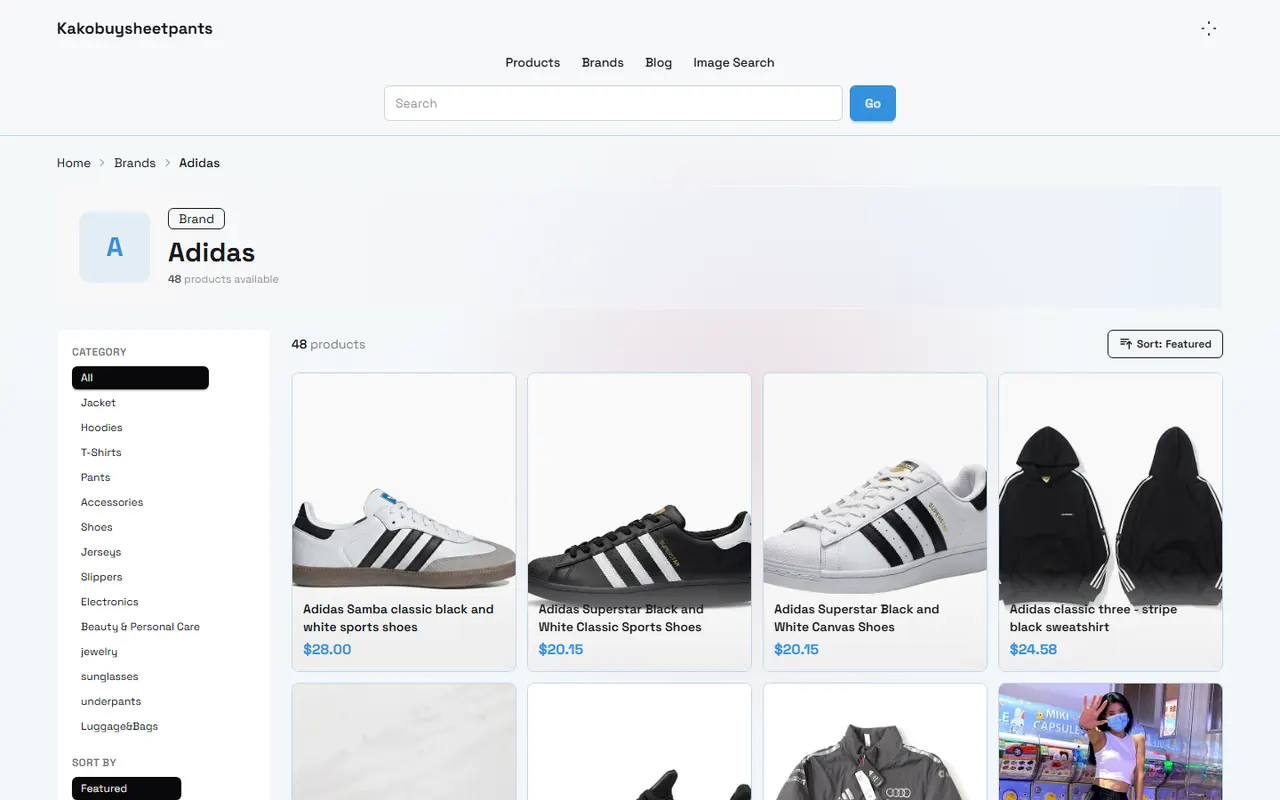
On Kakobuy's public category pages, you can see visible information such as category filters, sorting options, and product cards. For filtering training tops, it's recommended to first confirm whether the category matches your intended use, then check the fit, size, and fabric clues provided on the page. Do not fill in fields that are not displayed on the page. 📋
Choose Looseness and Length Based on Layering Needs
If the training top is mainly worn alone, a fitted or slightly loose fit is usually easier for observing movement and less likely to create excess bunching during machine workouts. If you need to layer a lightweight outer layer over it for outdoor warm-ups, prioritize enough room in the shoulders, back, and armholes.
When judging looseness, compare the garment's flat measurements with your body measurements rather than relying only on letter sizes like S, M, L. Focus on whether chest width, shoulder width, body length, and sleeve length all match. Different pages may use different measurement methods, so you cannot directly apply one page's size chart to another.
Length choice should also follow your movement patterns. If you frequently bend or stretch, a slightly longer body helps reduce riding up; if you often wear it under an outer layer, an overly long body may cause bunching. When there is no clear layering need, don't sacrifice freedom of movement for a so-called "universal fit."
The Boundary Between Page Evidence and Feel-Based Judgment
Page photos can help you observe the collar, sleeve type, hem, and panel placement, but they cannot prove actual fabric breathability speed, post-sweat drying time, friction, or long-term wash performance. Product descriptions can serve as screening clues, but cannot replace actual testing.
Therefore, it's recommended to split your judgment into two layers: first, record only the information explicitly provided on the page; second, mark issues that still need to be resolved through size verification, physical inspection, or after-sales confirmation. This helps you avoid turning visual impressions into conclusions about feel, and reduces the risk of mis-purchasing due to insufficient information.
If the page provides quality inspection photos, those photos are better suited for checking color, quantity, size labels, appearance defects, and obvious structural differences. They cannot prove breathability experience during wear, nor can they replace your personal judgment of mobility.
Use a Scenario Checklist to Compare Different Candidates
You can create a short checklist for each candidate:
Main use: indoor training, outdoor warm-up, or transition between the two.
Whether you need arm raises, torso twists, bending, and continuous arm swings.
Whether the shoulder line may restrict movement.
Whether the cuffs will affect wrist movement.
Whether the hem is suitable for wearing alone or layering.
Whether the page clearly provides fabric, size, and care information.
Whether missing information is significant enough to affect the purchase decision.
Whether the expected frequency of use justifies the cost of returns/exchanges due to poor fit.
The purpose of this checklist is to bring the comparison back to actual tasks, rather than relying on vague adjectives like "premium feel," "professional look," or "best value." Conclusions not supported by sufficient evidence should remain as items to be confirmed.
Next Steps: Determine a Top That Fits Your Training Routine
First, write down your most common training locations and the four movements, then check the page's shoulder width, chest width, body length, sleeve length, fabric description, and care information. If you mainly train indoors, prioritize confirming breathability structure and arm-raise room; if you mainly do outdoor warm-ups, additionally confirm layering allowance, cuff stability, and hem length.
Finally, record "known information" and "unknown information" separately. Only when there is no obvious conflict between size, fit, and use scenario should you proceed to the next step of verification. This method does not guarantee that every top will suit everyone, but it reduces the risk of deciding based solely on pictures or promotional wording.
This article is an editorial compilation based on publicly visible page information and platform materials. It does not represent that the author personally purchased, received, wore, or tested any specific product.
Agent Platform Shopping FAQ
1. What categories of products are listed in the kakobuy spreadsheet?
The kakobuy spreadsheet catalog includes footwear, apparel, bags, accessories, jerseys, fragrances, hats, scarves, belts, and many household living items.
2. Is it safe to browse the kakobuy spreadsheet website?
The kakobuy spreadsheet site does not gather any personal data. It functions only as a product listing for the agent platform, and all purchases are completed on the agent platform itself.
3. What should I do if I am dissatisfied with the item I received from kakobuy?
Contact kakobuy's customer service as soon as you can. For Chinese sellers, most non-specialty products have a 5-day unconditional return and exchange window. If you are unhappy, you may ask for a return. If the package has already been shipped and delivered to you, and you find a defect, you must reach out to kakobuy's support team so they can assist in communicating with the seller to work out a compensation arrangement.
Below are the support email addresses for each platform:
kakobuy: [email protected]
oopbuy: [email protected]
usfans: [email protected]
hipobuy: [email protected]
superbuy: [email protected]
4. Which platform currently has the best coupon offer?
I suggest using kakobuy, since it is currently providing a $15 discount code with no minimum spend threshold. This is a valuable choice for those shipping smaller parcels. The promo code is kakobuy888.
5. How do I review quality inspection photos on kakobuy?
When reviewing kakobuy's QC photos, pay attention to the unique attributes of the item you bought. For instance, with shoes, check key sections—the toe, heel, and tongue—for stitching quality, overall construction, and tongue thickness to judge if it is a high-quality pair. For clothing, look at the collar label, logo stitching, fabric, and how smooth the collar and cuffs are, among other details;
Browse our latest products and find your next favorite item.