Kakobuy Carbon Shoe Sizing Evidence Guide
Kakobuy Carbon Shoe Sizing Evidence Guide
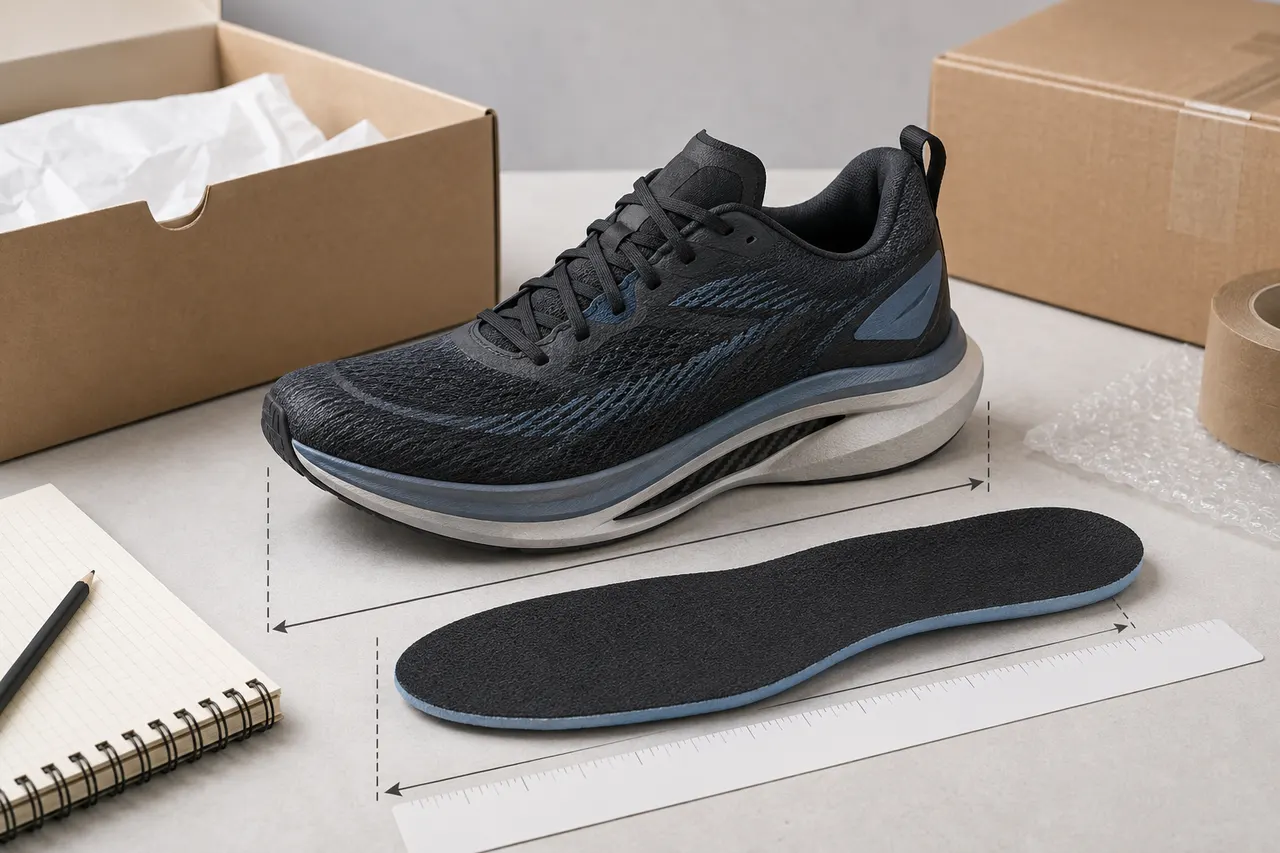
Carbon plate running shoe sizing cannot be judged solely by 'what size I normally wear.' Shoe last width, sock thickness, toe room, and the seller's measurement method can all cause the same size to produce different results. The specific problem this guide solves is: when the product size chart, foot length advice, insole length, and seller's written description conflict with each other, how to organize evidence and decide whether to lock in a size, continue asking, or abandon that candidate.
This article is not suitable for judging authenticity, carbon plate material, or actual running performance, and it cannot replace trying on. Prices, inventory, product pages, and return and exchange conditions may change, so re-verify before payment. The platform information referenced in this article was verified on September 4, 2026.
First Determine the Sizing Conflict to Solve
First, copy down the numbers that appear on the product page item by item, and do not immediately convert them into your usual size. Common conflicts include:
The size chart maps size 42 to a 26 cm foot length, but the seller also advises choosing size 42 for a 25.5 cm foot length.
The page states the in-shoe length, but customer service replies with the removable insole length.
The same shoe model uses EU sizing, Chinese sizing, or centimeter markings on different seller pages, without explaining the conversion method.
The product title says 'true to size,' but the detail page recommends going up half a size for wide feet.
First confirm whether each number represents foot length, insole length, usable in-shoe length, or outsole length. These four cannot be treated as the same data. In particular, outsole length usually cannot be used to infer fit.
After finding a candidate product on kakobuysheetpants.com, buyers should still return to the corresponding product information and order page to verify the seller, model, color, and size options. The value of that website should be in helping organize and compare candidates, not in guaranteeing size accuracy on behalf of the seller.
Compare the Evidence Levels of Size Charts, Foot Length Advice, and In-Shoe Length
Evidence strength depends on whether the data is specific to the current shoe model, whether the measurement target is stated, and whether it can be rechecked. Judge in the following order:
Physical measurement of the current shoe model and current batch, with clear indication of measuring the removable insole or in-shoe length.
A dedicated size chart provided on the current product page, indicating foot length correspondence and measurement units.
Seller's written reply addressing specific foot length, foot width, and wearing preferences.
The same seller's general sizing advice.
The buyer's usual size in other brands.
Information lower on the list is not entirely useless, but should not override higher, verifiable data. For example, wearing size 42 in other running shoes can only serve as background and cannot prove that the current candidate's size 42 will be the same.
Also check whether centimeters and millimeters are mixed up. 26 cm and 26.5 cm differ by 5 mm, and such a difference may already be enough to change the choice for a tight forefoot, pointed toe box, or thick socks. 📏
Incorporate Foot Shape, Sock Thickness, and Toe Room into the Judgment
Measurements should be taken at the time and under the conditions you plan to wear these shoes. Place paper on a hard floor, wear the socks intended for use, stand with weight on your feet, trace the outline of both feet, and measure from the longest toe to the rearmost point of the heel. Measure left and right feet separately, and use the longer one as the basis.
In addition to foot length, also record:
Width at the widest part of the forefoot.
Whether the instep is high.
Whether the second toe is longer than the big toe.
Whether using thin racing socks or thicker training socks.
Preference for snug fit, normal room, or more toe space.
Do not treat 'foot length plus a fixed number' as a universal formula for all shoe models. The required toe room is affected by shoe last, upper stretch, foot movement on downhills, and personal preference. If the product does not provide in-shoe length or insole data, you can only treat foot length advice as a candidate range, not a definitive answer. 👟
Use a Comparison Table to Record Known and Missing Data for Each Candidate Size
It is recommended to use one row per candidate size and keep track of data sources and missing items. The values below are only for illustration and cannot be taken as actual size data for any product.
Candidate Size | Page Suggested Foot Length | Insole Length | In-Shoe Length | Width Info | Current Judgment |
|---|---|---|---|---|---|
Size A | To verify | To verify | Not provided | Not provided | Cannot lock |
Size B | To verify | To verify | Not provided | Seller says suitable for wide feet, to confirm | Keep candidate |
Size C | To verify | Not provided | Not provided | Not provided | Insufficient evidence |
'Not provided' and 'To verify' should be recorded separately. The former means the page does not have this information, the latter means data was seen but its meaning or timeliness has not been confirmed. This helps avoid mistaking unconfirmed numbers for actual measurements.
How to Narrow Down When Different Sellers' Labels Conflict
Even if images and shoe model names are the same, different sellers may have different sources, batches, and labeling methods. First confirm that the comparison objects are truly the same model, same version, and same sizing system before comparing numbers.
You can submit a set of specific questions to the seller or agent customer service:
Does this centimeter value represent recommended foot length, insole length, or in-shoe length?
Can the insole be removed and measured flat?
Does the measurement include the curve where the insole rises at the front and back?
Does the currently selected color and version use the same size chart?
Can you confirm that the shoebox label, inner shoe size tag, and order option are all consistent?
When asking questions, provide only foot length, foot width, sock type, and preferred room. Do not send ID documents, payment cards, full address, or other irrelevant personal information. 🔎
If two sellers provide different insole lengths for the same size, you should prioritize asking each for the measurement basis of their current product, and do not take an average. The average would mask batch or measurement method differences and cannot represent the actual pair you will receive.
What QC Photos Can and Cannot Confirm
According to platform information recorded on September 4, 2026, kakobuy's inspection scope includes appearance information such as model, quantity, color, size, and style. For shoes, buyers can use the QC information after warehouse arrival to check whether the shoebox size, inner label, left/right foot markings, and color/style match the order.
QC photos can usually help confirm:
Whether the delivered item is the selected model and colorway.
Whether the sizes on the left shoe, right shoe, and shoebox label are consistent.
Whether there are obvious visible abnormalities on the upper, sole, and packaging.
The approximate range of external dimensions when a ruler reference photo is provided.
QC photos usually cannot prove:
Whether the actual usable space inside the shoe will fit your foot shape.
Whether the forefoot width, arch support, or heel lockdown will be comfortable.
Whether the carbon plate structure, energy return, or material composition matches the claims.
Whether the photographed outsole length equals the insole length.
Whether there will be no rubbing or toe jamming after long runs.
If sizing remains questionable, you should request measurement or return/exchange within the handling window after warehouse arrival. Platform information records that ordinary products support five-day no-reason return/exchange within 120 hours after warehouse arrival, but special products and those where removal of packaging, tags, or accessories was requested may not be eligible. Specific eligibility, fees, and remaining time must be based on the current order status and platform response. ⏱️
Evaluate the Different Risks of Sizing Up, Sizing Down, and Abandoning the Candidate
Sizing up may increase forefoot room, but may also cause heel slippage, foot movement inside the shoe, or insufficient lockdown. Compensating for an overly large shoe volume solely by tightening laces may not be suitable for running.
Sizing down may provide a snugger feel, but the risk of toe jamming, forefoot compression, and discomfort on downhills increases. Whether the upper will stretch cannot be reliably judged from static images.
When two adjacent sizes both lack insole or in-shoe length data and the seller cannot explain the size chart methodology, abandoning the candidate is usually more controllable than guessing. Cross-border purchases also involve returns within China, re-shipping, and time windows; the cost of a wrong size is not just the price of a pair of shoes.
Final Action: Lock the Size or List Pre-Order Questions to Confirm
Only lock the size when the following information supports each other:
Weight-bearing foot length and width of both feet have been measured.
The product size chart clearly indicates that it corresponds to recommended foot length.
The current version and color use the same size chart.
The candidate size's insole or in-shoe data has a clear measurement method.
There are no unexplained conflicts between the seller's description and the page information.
If only one item is missing, you can write it down as a pre-order question to confirm; if key data contradict each other and cannot be rechecked, you should pause the purchase. After the product arrives at the kakobuy warehouse, use QC photos to verify the model, labels, and visible condition, and make the final decision while returns/exchanges are still possible.
This method does not promise a fixed amount of savings. How much it saves depends on the product price, domestic return shipping costs in China, re-order costs, and whether international shipping has already begun; these amounts must be calculated for the current order. The added cost is the time needed for measuring, asking, and waiting, while the main risk reduced is bearing return/exchange or cross-border return costs after guessing the wrong size.
It is suitable for buyers facing size chart conflicts, non-standard foot shapes, or inability to try on; it is not recommended for flash sales where evidence is missing but immediate payment is required, nor for treating static QC photos as a guarantee of fit or performance. The final principle is simple: if data can be explained, lock; if key data is missing, ask; if conflicts cannot be eliminated, abandon. ✅
agent platform shopping FAQ
1. For kakobuy orders, what is the best way to evaluate product quality?
Instead of depending on factory pictures, which are often edited, you should examine the QC images provided by kakobuy. Use those QC photos to verify that the item matches your detailed requirements before you decide to complete the purchase. Additionally, be cautious with products that have an unusually low price, since they tend to be of poor quality.
2. Why does kakobuy avoid using Google Sheets?
Google Sheets works only for small spreadsheets. When the product count grows, loading becomes very slow and the system lags, especially on mobile devices where the display is poor and searching is difficult. For the same products, the kakobuy website spreadsheet loads faster and provides a better visual experience.
Browse our latest products and find your next favorite item.